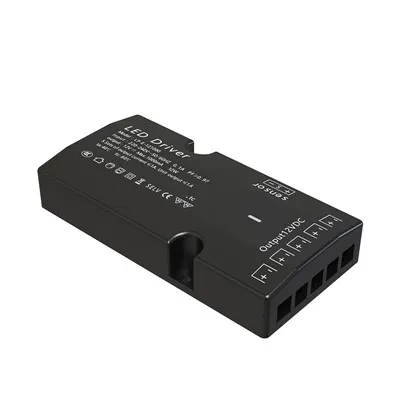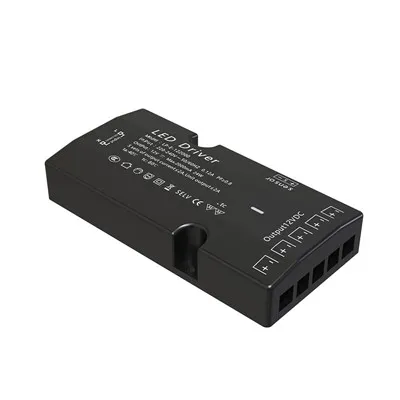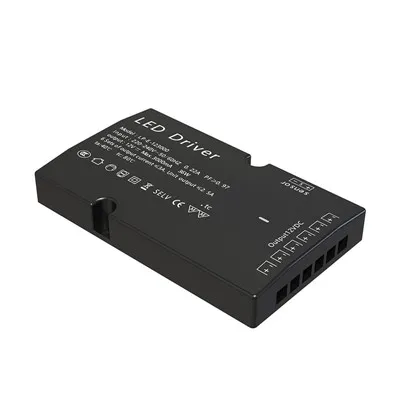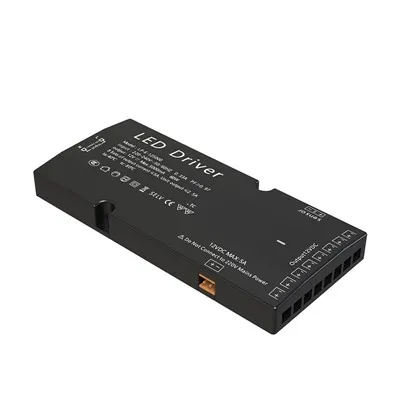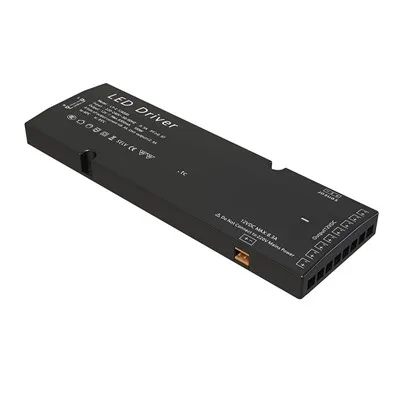

LEDs have many advantages, such as being environmentally friendly, energy-saving, compact, and having a long lifespan. This makes LEDs gradually replace traditional fluorescent lamps and incandescent lamps in future general lighting. The performance of the driving power supply is the key to ensuring the overall performance of LEDs. Therefore, it is necessary to ensure that the LED driving power supply has advantages such as being compact, having a long lifespan, and being highly reliable. The following are the research hotspots of LED driving:
Improve the lifespan of the driving power supply
One of the most important advantages of LEDs is their long lifespan, which is about 30,000 to 100,000 hours. Traditional LED driving power supplies contain electrolytic capacitors, and the lifespan of electrolytic capacitors is relatively short, about 5,000 hours. This is the main reason that restricts the lifespan of LED driving power supplies. Therefore, electrolytic capacitors should be avoided as much as possible in LED driving power supplies.
Improve the input power factor of the driving power supply and reduce total harmonic distortion
The "Energy Star" solid-state lighting document issued by the U.S. Department of Energy stipulates that any power level requires mandatory power factor correction. This standard applies to a range of products, such as table lamps, cabinet lights, etc. Among them, the power factor of LED drivers for residential lighting must be greater than 0.7, and for commercial lighting it must be greater than 0.9. The IEC61000-3-2 harmonic content standard stipulates that in lighting with a power level greater than 25W, the total harmonic distortion (THD) should be less than 35% and the power factor should be not less than 0.7. The introduction of these standards has put forward higher requirements for the design of LED lighting drivers.
Reduce the size of the driver
LED itself is relatively small, which is very advantageous for portable products. The LED driver should also be as small as possible so that it can be easily installed in the LED lamp holder. In the design process, the size of the driver should be reduced as much as possible.
Improve the reliability of the driver
During the operation of LED, non-human factors such as high temperature and device aging can cause fatal damage to the LED body. Therefore, overvoltage protection, overcurrent protection and other protection circuits should be added to the LED driver to handle emergency situations and ensure the safe operation of the LED body.